Burnout Isn't Just About Work Anymore
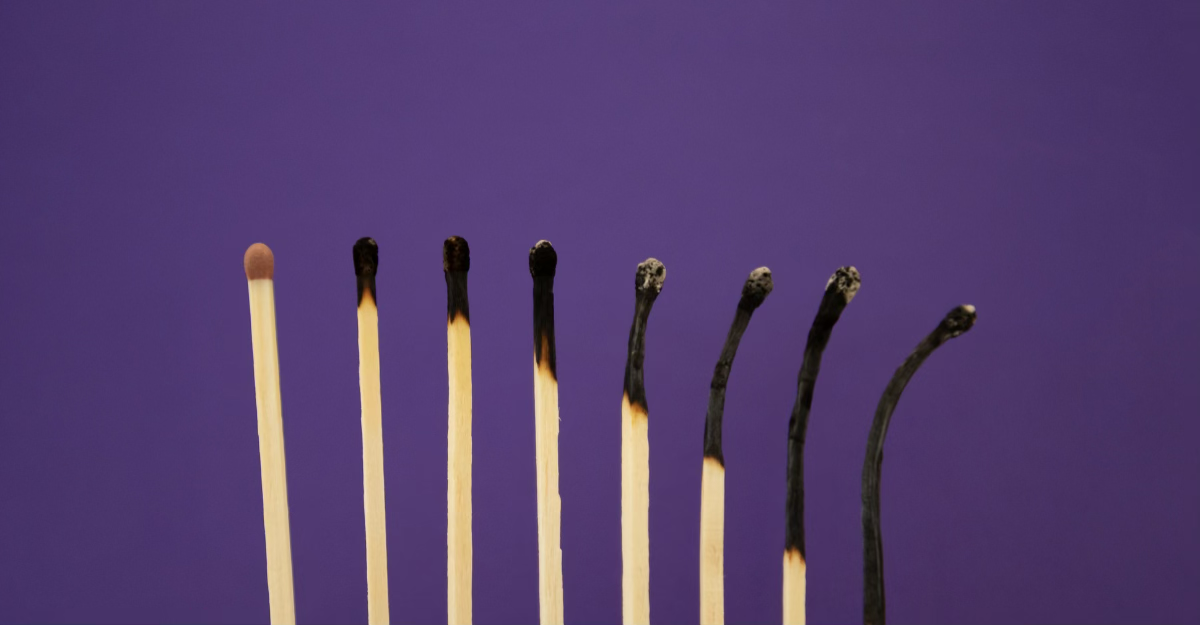
When most people hear the word burnout, they picture someone overwhelmed by long workdays, endless meetings, and an inbox that never seems to stop filling up. While work-related burnout is very real, it's only part of the story.
Today, many people feel emotionally and physically drained without necessarily having a demanding career. Parents are stretched thin trying to balance work, home, and the mental load of family life. Caregivers spend countless hours looking after aging parents or loved ones with chronic illness. People in emotionally demanding relationships may find themselves constantly supporting others while neglecting their own needs. Even those who aren't working outside the home can experience a deep sense of exhaustion that doesn't disappear with a good night's sleep.
Burnout has expanded beyond the workplace because our lives have become increasingly demanding in many different ways. We are constantly connected, expected to be available, and often juggling multiple roles at once.
If you've been feeling exhausted, emotionally numb, or like you're simply going through the motions, you're not alone. And no, you're not "just being lazy" or "not trying hard enough."
Let's explore what burnout can look like outside of work, why it happens, and what can help.
Burnout Is More Than Feeling Tired
Everyone gets tired from time to time. Burnout is different.
Burnout is a state of ongoing physical, emotional, and mental exhaustion that develops after prolonged periods of stress. It doesn't usually happen overnight. Instead, it builds slowly over weeks, months, or even years.
At first, you may simply feel a little more tired than usual. Then motivation starts to fade. Tasks that once felt manageable become overwhelming. Small inconveniences feel enormous. You may notice yourself becoming more irritable, detached, or emotionally flat.
Many people describe burnout as feeling like their internal battery never fully recharges.
You can sleep for eight hours and still wake up exhausted because the exhaustion isn't only physical. It's emotional.
Burnout Doesn't Always Come From a Paycheque
One of the biggest misconceptions about burnout is that it only happens because of work.
In reality, burnout develops when the demands placed on us consistently outweigh the resources we have to meet them. Those demands can come from almost any area of life.
Think about how many roles one person might carry.
You may be an employee.
A parent.
A partner.
A caregiver.
A friend everyone leans on.
The organizer of the household.
The one who remembers birthdays, books appointments, plans meals, helps with homework, and checks in on everyone else's wellbeing.
Each responsibility on its own may feel manageable. Together, they can become overwhelming.
Parenting Burnout Is Real
Parenting is rewarding, but it can also be incredibly demanding.
Children rely on their caregivers not just for food and shelter, but for emotional support, problem solving, comfort, patience, and guidance. Those needs don't stop at the end of the workday.
Many parents feel pressure to "do it all." They want to be patient, present, financially secure, involved at school, emotionally available, and somehow still find time to exercise, cook healthy meals, maintain friendships, and sleep.
That's an impossible standard.
Parenting burnout often develops when caregivers feel like they have no opportunity to recover between responsibilities.
Signs may include:
Feeling emotionally distant from your children
Becoming more irritable than usual
Feeling guilty no matter what you do
Constant exhaustion
Losing enjoyment in activities you once loved
Feeling like you're failing despite trying your best
Many parents carry shame about these feelings because they genuinely love their children.
The truth is, loving your family doesn't protect you from burnout.
Caregiver Burnout Often Goes Unnoticed
Caregiving can be one of the most meaningful roles a person takes on.
It can also be one of the most emotionally exhausting.
Whether you're caring for an aging parent, supporting a partner with chronic illness, helping a child with complex needs, or providing ongoing support to another loved one, caregiving often requires constant attention, flexibility, and emotional energy.
Many caregivers put their own needs at the bottom of the list.
Appointments get postponed.
Sleep becomes less consistent.
Exercise disappears.
Social connections fade.
Over time, the emotional weight builds.
Caregivers may begin feeling isolated, overwhelmed, guilty for wanting a break, or even resentful of the situation. These emotions are incredibly common, yet many people feel uncomfortable talking about them because they worry they'll sound selfish.
Wanting rest doesn't mean you love someone any less.
It means you're human.
Relationships Can Be Emotionally Exhausting Too
Not all burnout comes from tasks.
Sometimes it comes from emotional labour.
You may be the person who always keeps the peace, manages conflict, remembers everyone's feelings, and checks in on everyone else.
Maybe you're constantly walking on eggshells in a relationship.
Perhaps you find yourself repeatedly giving emotional support without receiving much in return.
Over time, constantly carrying the emotional weight of a relationship can become exhausting.
This kind of burnout often leaves people feeling emotionally numb or disconnected, even from relationships they deeply value.
Healthy relationships involve mutual support, not one person carrying the emotional load indefinitely.
The Invisible Mental Load
One of the biggest contributors to modern burnout isn't always what we're physically doing.
It's what we're mentally carrying.
Psychologists often refer to this as the "mental load."
It's remembering appointments before anyone reminds you.
Keeping track of groceries.
Planning birthdays.
Managing school forms.
Knowing when prescriptions need refilling.
Remembering which child needs new shoes.
Checking in on aging parents.
Monitoring everyone's emotional wellbeing.
Most of this work happens quietly, behind the scenes.
It rarely appears on a to-do list, yet it consumes enormous mental energy.
When your brain is constantly scanning for the next responsibility, it rarely has a chance to fully rest.
Why Rest Alone Doesn't Always Fix Burnout
Many people assume burnout simply means they need a vacation.
Sometimes time away helps.
Sometimes it doesn't.
That's because burnout isn't always caused by being busy.
It's often caused by living in a state of chronic stress without enough recovery, support, boundaries, or emotional replenishment.
If you return from vacation to the exact same overwhelming responsibilities, the relief may disappear quickly.
Recovery often requires more than rest.
It may involve changing expectations, asking for help, setting healthier boundaries, sharing responsibilities, or learning to let go of unrealistic standards.
Signs You May Be Experiencing Burnout
Burnout looks different for everyone, but some common signs include:
Feeling emotionally drained most days
Losing motivation for activities you once enjoyed
Becoming more irritable or impatient
Feeling detached or emotionally numb
Difficulty concentrating
Frequent headaches or muscle tension
Trouble sleeping even when you're exhausted
Feeling like you're constantly behind
Increased anxiety or sadness
Feeling guilty whenever you take time for yourself
Experiencing some of these symptoms doesn't automatically mean you're burned out, but they may be signs that your current pace isn't sustainable.
What Can Help?
There isn't a single solution to burnout, especially when many responsibilities can't simply disappear.
Instead, recovery usually happens through small, consistent changes.
Start by noticing where your energy goes.
Ask yourself:
What responsibilities absolutely need to stay?
Which ones could be shared?
Which expectations have I placed on myself that may not actually be necessary?
Many people discover they're holding themselves to impossible standards.
You don't have to be perfect to be a good parent.
You don't have to solve everyone's problems to be a caring partner.
You don't have to earn your rest by finishing every task first.
Recovery also involves reconnecting with activities that restore rather than deplete you.
That might mean spending time outdoors, moving your body in ways you enjoy, connecting with supportive friends, practicing mindfulness, reading, creating art, or simply allowing yourself moments of quiet without feeling guilty.
Small moments of restoration matter more than many people realize.
You Weren't Meant to Carry Everything Alone
Many people have become so accustomed to functioning while exhausted that burnout starts to feel normal.
But constantly running on empty isn't something you simply have to accept.
Whether your exhaustion comes from parenting, caregiving, relationships, work, or the invisible responsibilities that fill every day, your experience is valid.
You deserve support just as much as the people you spend your time caring for.
Burnout isn't a sign of weakness.
Often, it's a sign that you've been carrying too much for too long.
Giving yourself permission to slow down, ask for help, and care for your own wellbeing isn't selfish.
It's one of the healthiest investments you can make in yourself and in the people who matter most to you.
Thinking About Taking the Next Step?
If you've been feeling emotionally exhausted, overwhelmed, or like you're constantly running on empty, therapy can provide a supportive space to explore what's contributing to your burnout and develop strategies that fit your life.
Ready to start the conversation? We'd be happy to help you take that next step.
References:
American Psychological Association. (2023). Burnout and stress. https://www.apa.org/topics/healthy-workplaces/work-stress
Maslach, C., & Leiter, M. P. (2016). Burnout. In G. Fink (Ed.), Stress: Concepts, Cognition, Emotion, and Behavior (pp. 351-357). Academic Press.
World Health Organization. (2019). Burn-out an "occupational phenomenon": International Classification of Diseases (ICD-11). https://www.who.int/news/item/28-05-2019-burn-out-an-occupational-phenomenon-international-classification-of-diseases
Mikolajczak, M., Gross, J. J., & Roskam, I. (2019). Parental burnout: What is it, and why does it matter? Clinical Psychological Science, 7(6), 1319-1329.